Why midlife women are exhausted, pissed off, and ready to fight back after being wronged by the U.S. healthcare system, over and over.
After 20+ years living in Spain, I returned to the U.S. and jumped back into the American healthcare system — and I’m already exhausted. I had my first appointment with a new general practitioner, a woman who came highly recommended for being open-minded and “deeply interested” in women’s health. She referred me to her gynecologist — said she swore by her, sees her personally, and that I’d be in good hands.
Spoiler alert: I was not.
The Appointment from Hell
Yesterday, I drove 40 minutes to this “highly recommended” gynecologist. I sat in a crowded waiting room for another 40 minutes before finally being called in. The nurse took my info — weight, blood pressure, symptoms, and then handed me two flimsy paper napkins and told me to undress completely.
Let me repeat: two napkins and zero dignity.
I waited on the table, cold and exposed, for 15 minutes. Why do we do this? Why can’t we undress when the doctor is actually on their way? Why is comfort always an afterthought?
The doctor came in, smiling, friendly, and started asking questions. I explained that I’m turning 50 in a few days and I’ve been experiencing persistent vaginal and anal burning and itching for over a year and a half. I’ve seen several doctors, ruled out infections, taken multiple rounds of yeast infection meds, and was finally told I had Lichen Sclerosis and needed to use a steroid cream.
She asked me, “Have you tried Benadryl?”
Benadryl.
For chronic, hormone-related burning and itching.
WTF.
She seemed surprised I wasn’t loading up on over-the-counter meds. I asked her if this could be tied to perimenopause — hormone changes, symptoms, all the things we know are happening even if we’re still getting a damn period. She shrugged and said, “Well, you’re not in menopause if you’re still bleeding.”
So let me get this straight: no menopause, no help?
I pressed. I asked if hormone therapy — topical estrogen, for example — was an option. She mentioned testosterone, maybe progesterone, and finally admitted yes, topical estrogen is sometimes prescribed for Genitourinary Syndrome of Menopause (GSM) — but only if you have vaginal dryness.
“Do you have vaginal dryness?” she asked.
I said, “Yes, but you never asked. And also? My bigger issue is that my vagina and anus have been burning and itching every single day for 18 months.”
She finally agreed to prescribe estradiol cream. Explained how to use it. Asked if I had questions. Nope. I had already asked — and answered — everything myself. I thanked her for the prescription and the total lack of validation.
And Then It Got Weirder
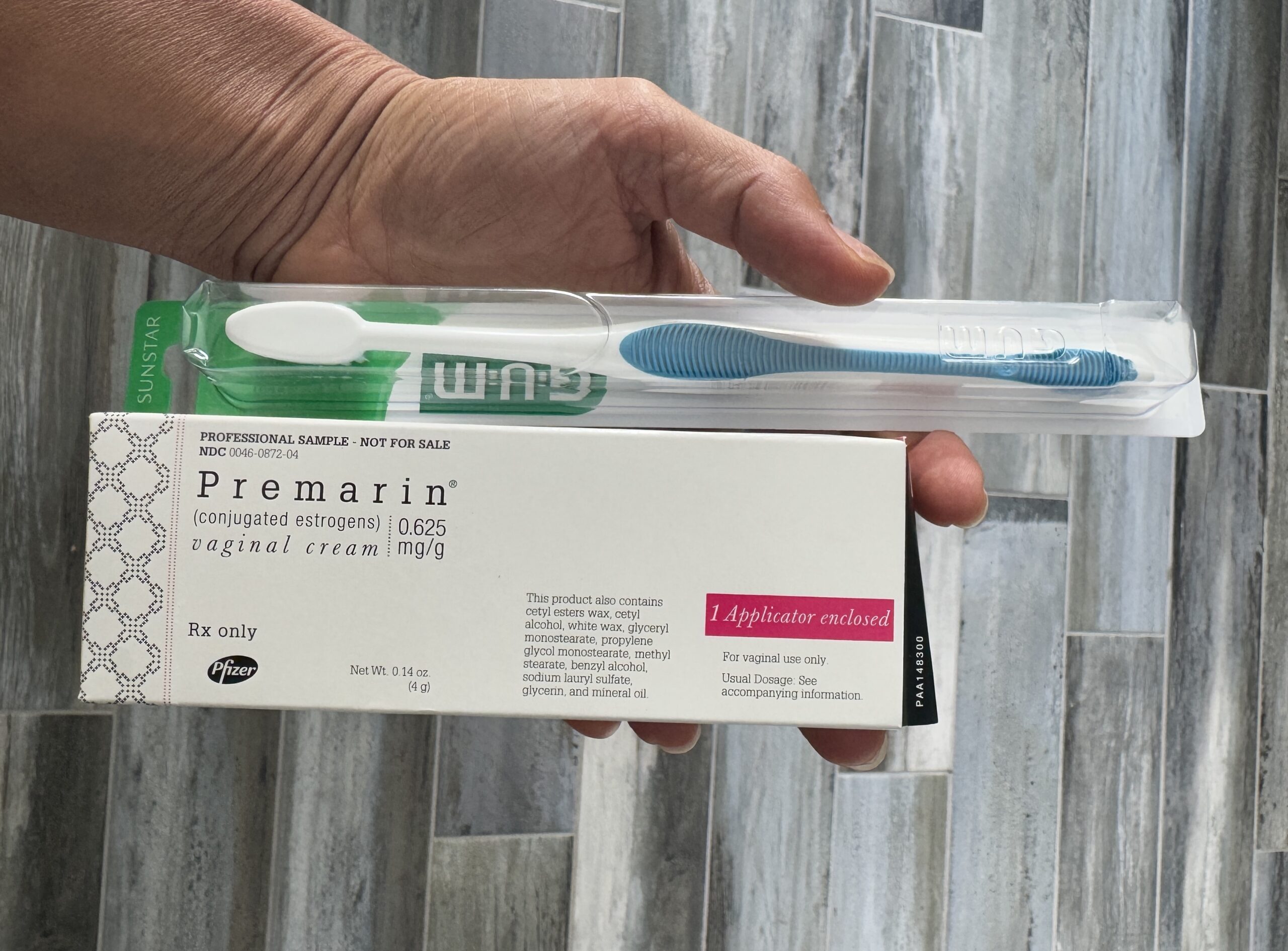
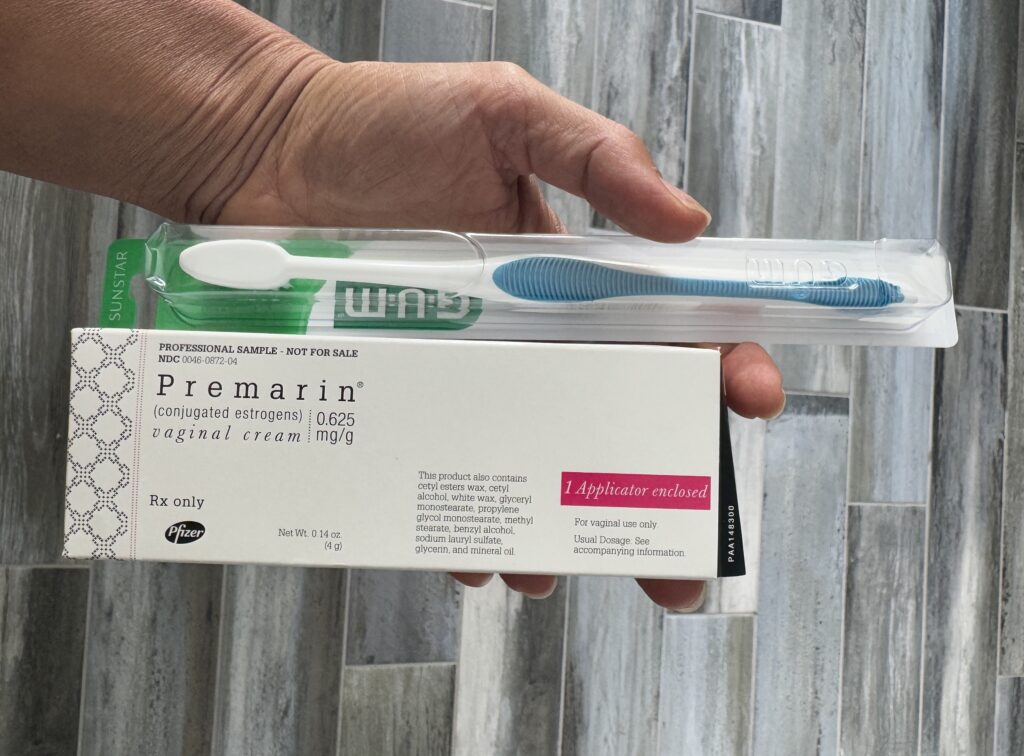
I got dressed, walked out to reception, and they handed me a box of Premarin without a word. No explanation, no instructions. Just, “Here ya go.” It wasn’t even the medication she prescribed — that was waiting at my pharmacy. This was just a freebie.
It was like getting a free toothbrush from your dentist — except you know how to use toothpaste because you’ve been brushing your teeth your whole life. Do women know what Premarin is? Do they know how to use it? Hell no — and no one explained it. Just a pat on the head and a mystery drug on your way out the door.
Here’s the Real Problem
I’m a menopause coach. I teach this stuff. I live it. I study it.
And I still left that appointment feeling dismissed, invalidated, and like I had to fight tooth and nail for even a shred of help.
So what the hell happens to the woman who doesn’t know what to ask?
What happens to the woman who doesn’t feel confident speaking up?
She suffers. In silence.
And that is unacceptable.
We Deserve Better
To every woman out there who has been dismissed, brushed off, gaslit, and told “it’s just aging” or “it’s in your head” — I see you. I am you.
It’s time to stop apologizing.
It’s time to demand better.
This is our health, our lives, our bodies.
Educate yourself. Learn the language. Ask the uncomfortable questions. Push back. And when you’ve had enough?
ROAR.
We’re not crazy. We’re not hysterical.
We are in perimenopause and menopause — and we deserve care, support, and answers.
Not napkins and Benadryl.
Because if I — someone who teaches this stuff — am still crying in my car afterward, what hope do other women have?
That has to change. And it starts with us.